
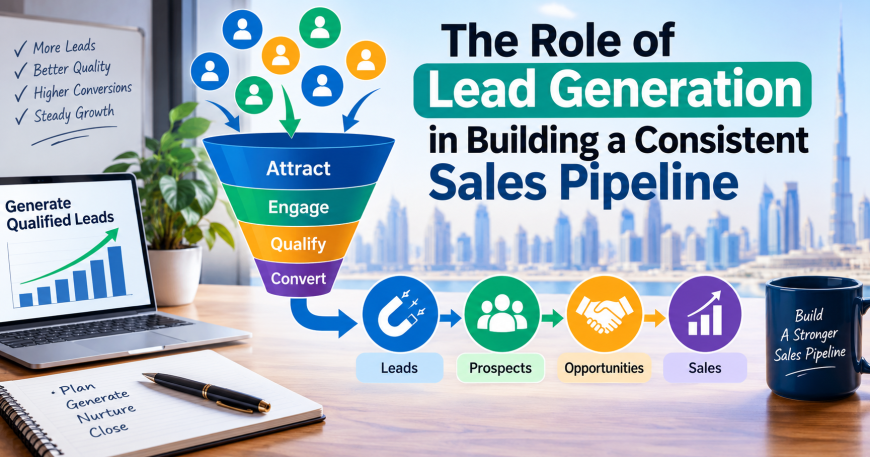
All businesses need a steady flow of new customers to grow and generate income. However, finding new customers isn’t always easy. People may visit a site, browse a product, or inquire about a service and still not buy. This is why companies need a powerful method to attract and reach potential clients. Lead generation helps businesses identify people who may be interested in what they offer and move them toward a purchase decision.
Explanations are as Follows:
An uninterrupted sales chain gives a business clear insight into potential customers at various points in the purchasing cycle. Lead generation is relevant in maintaining this pipeline. Businesses cannot rely on customers to show up; they can reach the right audience through various channels. This gives the company more sales prospects and supports long-term business growth.
What Is Lead Generation?
Lead generation is the process of identifying individuals who might be interested in a product or service. Such individuals are referred to as leads. A lead can come from many sources, including a website, social media, search engines, online advertising, email marketing, or referrals.
Taking names or contact details is not the primary objective. The aim is to appeal to individuals genuinely interested in what a business offers. The right information and support for quality leads increase the likelihood they become customers.
What is the Importance of Lead Generation?
Lead generation helps businesses avoid relying too heavily on current customers. A company must have new avenues to keep its sales pipeline going. With a steady inflow of leads, sales teams can reach more people, learn more about them, and guide them through the process.
It also helps businesses reach their target audience. For example, a company can create content or ads for people searching for a specific service. This makes marketing more targeted and reduces wasted time and resources.
How Lead Generation (aka) constructs a Robust Sales Pipeline?
A sales pipeline illustrates where potential customers are in the purchasing process. Some may be researching a business, while others may already be ready to purchase. Lead generation fills the top of this pipeline with new prospects. Companies that prefer professional assistance can consider Lead Generation Services in Dubai to develop a more structured strategy for finding and reaching interested customers.
Once leads enter the pipeline, businesses can provide relevant information based on their needs. Prospects may engage with helpful blog posts, emails, product information, and follow-ups. Over time, some leads may be more willing to pull out the cash.
You must keep generating leads regularly, since not all leads will turn into customers. Others may lose interest or choose a different company. A steady stream of new leads can offset these losses and keep the pipeline active.
Various Techniques to Generate Leads
Businesses can do numerous things to create leads. Search engine optimization can help a website be found when people search for related products or services. Social media can also attract people with useful posts, videos, and other content.
Another applicable tool is email marketing. Businesses can email useful information, special offers, and updates to people who have already shown interest. Paid advertising can also attract targeted visitors to a website.
Lead Generation and S.T. Performance
Recruiting quality leads can simplify a sales team’s efforts. When salespeople receive leads that match the target audience, they can spend more time communicating with people who actually need what they sell.
Marketing and sales departments should collaborate to determine what constitutes a good lead. They can also monitor lead sources and which techniques are most effective. This information helps businesses improve future campaigns.
The Quality of Lead
Receiving lots of leads does not necessarily translate to increased sales for a business. Lead quality is also crucial. A business should aim to appeal to individuals who are not indifferent to its product or service, but who see a need or are interested in it.
Distinct customer profiles can help businesses understand whom they want to reach. They can then develop content and campaigns that directly address these customers. Better targeting can lead to stronger conversations and sales.
The Lead Generation Results
Businesses should monitor their lead generation efforts to understand what works. Key metrics include lead volume, website traffic, conversion rates, and sales generated from leads.
Measuring these outcomes helps companies identify effective channels and areas for improvement. Over time, this information can help build a more effective and reliable sales process.
Conclusion
One of the significant aspects of creating a stable sales pipeline is lead generation. It helps businesses generate new leads and gives sales teams a consistent pool of potential customers to work with. With the right strategy, businesses can reach individuals likely to need their products or services. An effective lead-generation process cannot occur on short notice. It involves useful content, effective targeting, frequent follow-ups, and keen monitoring. When businesses make lead generation a core part of their marketing strategy, it drives more sales and creates a stronger path to future growth.


